
Flood Insurance Cost & Risk by State: 2026 Report

Reviewed by Aaron J. Farmer, licensed flood specialist CA License #0L75450 · Last reviewed August 20, 2026
Flooding is the most common and costly natural disaster in the United States — and as FEMA’s Risk Rating 2.0 reshapes premiums and a changing climate intensifies storms, the cost and the coverage gap vary dramatically by state. Statewide Flood Insurance analyzed flood insurance cost and risk across 17 of the nation’s most flood-exposed states. Here’s what we found.
Key Findings
- Florida dominates U.S. flood insurance — roughly 1.7 million policies, about 35% of every flood policy in the country.
- The coverage gap is the real crisis. From New York to Oregon to North Carolina, most homes facing real flood risk carry no flood insurance at all.
- Flooding outside FEMA “high-risk” zones is everywhere — 43% of flooded North Carolina homes and roughly a third of Boston-area claims came from low- and moderate-risk areas.
- Connecticut is the most expensive state we quote — a median of 9 across 134 properties, ahead of Alabama (2) and Oregon (0). Michigan is the least expensive, at 9.
- “Landlocked” does not mean safe. Inland states post huge losses — Ohio has logged 5,400+ flood events, and 365,000+ Michigan homes face a 26%+ flood risk.
- The threat is intensifying. 2024–2025 alone brought Hurricane Helene’s Atlanta flash-flood emergency, 16 inches of Connecticut rain in hours, and a Washington atmospheric river that evacuated over 100,000 people.
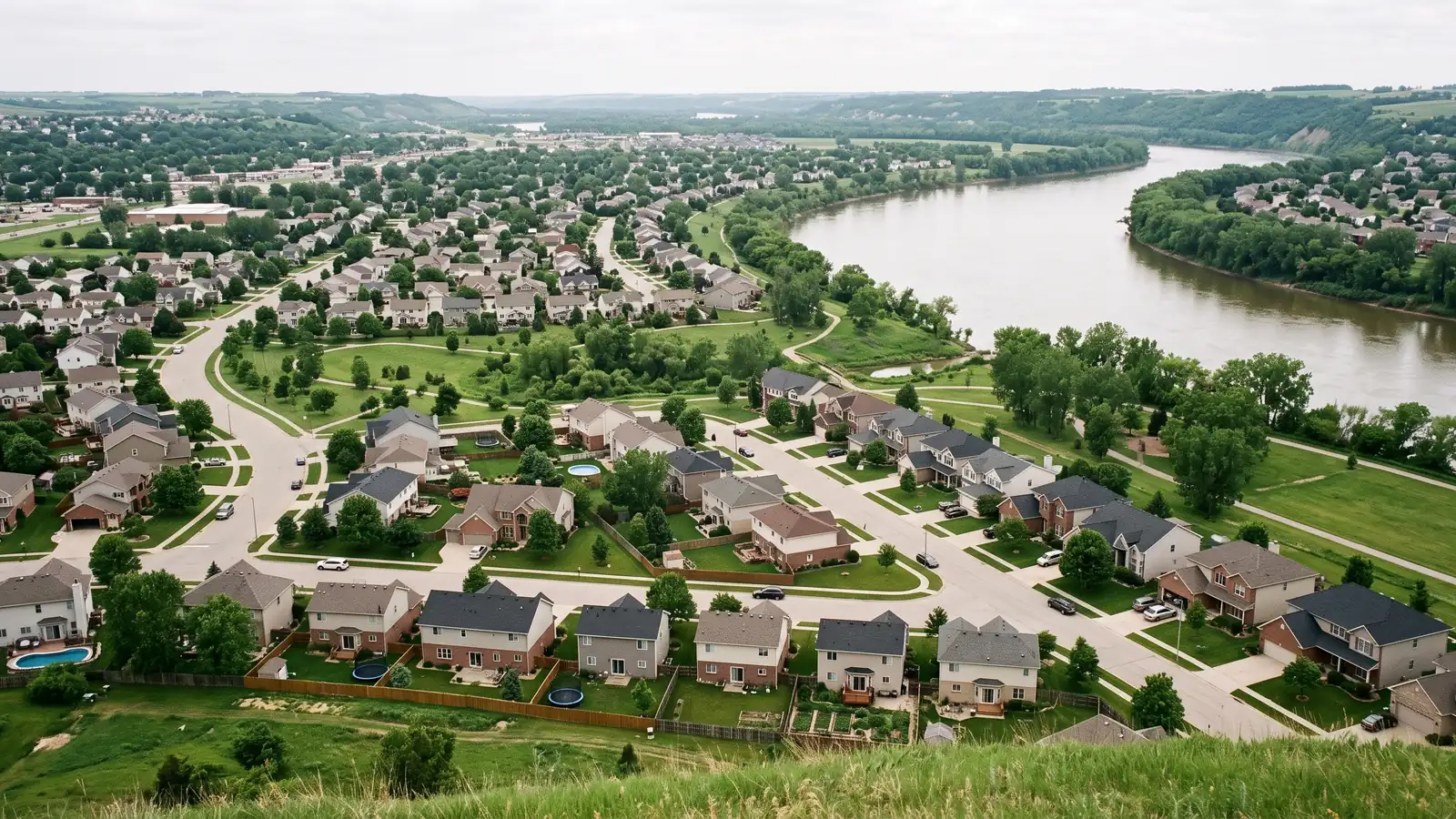
Flood risk by state (2026)
A notable flood fact for each state we analyzed. What cover actually costs is in the private-market table below. Click any state for full local detail and sources.
| State | Notable |
|---|---|
| Florida | ~1.7M policies — about 35% of all U.S. flood policies |
| Louisiana | Highest flood-coverage rate in the U.S. (~20.9% of homes) |
| New Jersey | 4th in the nation — ~220,000 policies |
| New York | ~160,000 policies; most at-risk homes uninsured |
| Connecticut | Aug 2024: up to 16 inches of rain in 6–8 hours |
| Ohio | 5,400+ recorded flood events; ~$1.8B in damage |
| Illinois | Overwhelmingly inland river & urban flooding |
| Massachusetts | ~1/3 of Boston-area claims came from outside high-risk zones |
| Texas | Most flood-prone land of any state — 20M+ acres |
| Alabama | 58,500+ policies protecting $12.3B in property |
| Georgia | Helene 2024: Atlanta’s first-ever flash-flood emergency |
| North Carolina | UNC study: 43% of flooded homes were outside high-risk zones |
| Washington | Dec 2025 atmospheric river evacuated 100,000+ |
| Oregon | ~26,800 policies; most at-risk homes uninsured |
| Tennessee | 2021 Waverly flash flood — 17+ inches of rain |
| South Carolina | ~200,000+ policies; hurricane & coastal exposure |
| Michigan | 365,000+ homes face a 26%+ chance of flooding |
Private flood insurance is frequently 30–50% below these NFIP figures for eligible homes, with higher limits. See private vs. NFIP →
What private flood insurance actually costs, by state
The table above reports NFIP premiums — the federal programme, from public data. This one reports something different and, for most readers, more useful: what the private market actually quoted. These are median all-in annual premiums from 7,165 properties we priced across 27 states between February 2025 and August 2026, counted one per property so repeat quotes on the same address do not skew the figures.
“All-in” means premium plus policy fee and any state surplus lines taxes — the number on the bill. Note this is a different fee stack from an NFIP policy, which carries a reserve fund assessment, a federal policy fee and the HFIAA surcharge instead, so the two tables are not directly comparable line for line.
Quoted, not bound. These cover every property we priced, including those that did not buy. We checked how much that matters: across the states where we bind enough policies to compare, the median quoted premium runs about $20 a year above the median policy actually bound, and in our largest states the gap is close to zero. Every state below cleared a minimum of 50 quoted properties; states with thinner data are left out rather than shown with a number we would not stand behind.
| State | Median Annual Cost | Typical Range | Properties Quoted | By Flood Zone |
|---|---|---|---|---|
| California | $719 | $509–$867 | 3130 | A (numbered) $773 · AE $763 · A $711 · AH $710 · AO $658 · X $516 |
| Washington | $688 | $483–$835 | 439 | A $719 · AE $706 · X $598 |
| Texas | $670 | $509–$970 | 367 | AE $892 · X $614 |
| Florida | $681 | $492–$984 | 342 | AE $895 · X $617 |
| Oregon | $760 | $639–$883 | 219 | AE $782 |
| Arizona | $547 | $464–$800 | 203 | AE $581 |
| South Carolina | $609 | $481–$921 | 197 | AE $799 · X $576 |
| North Carolina | $712 | $486–$1069 | 168 | AE $945 · X $621 |
| New York | $703 | $472–$1168 | 167 | AE $732 |
| Massachusetts | $709 | $478–$997 | 156 | AE $766 |
| Georgia | $510 | $365–$807 | 152 | X $384 |
| Ohio | $620 | $475–$844 | 150 | AE $674 |
| Pennsylvania | $534 | $380–$799 | 136 | AE $558 |
| New Jersey | $748 | $430–$1143 | 134 | AE $877 |
| Connecticut | $869 | $623–$1162 | 134 | AE $957 |
| Michigan | $369 | $359–$559 | 121 | AE $369 |
| Illinois | $518 | $363–$766 | 115 | AE $513 |
| Tennessee | $671 | $475–$963 | 104 | Not enough quotes per zone to report |
| Alabama | $782 | $539–$1592 | 99 | AE $1000 |
| Virginia | $649 | $563–$880 | 95 | AE $736 |
| Oklahoma | $465 | $350–$675 | 93 | Not enough quotes per zone to report |
| Hawaii | $666 | $504–$933 | 59 | Not enough quotes per zone to report |
| Louisiana | $601 | $473–$1025 | 57 | Not enough quotes per zone to report |
| Missouri | $533 | $473–$793 | 54 | Not enough quotes per zone to report |
| Mississippi | $656 | $469–$991 | 53 | Not enough quotes per zone to report |
| New Mexico | $469 | $464–$824 | 52 | Not enough quotes per zone to report |
| Colorado | $703 | $465–$1168 | 51 | Not enough quotes per zone to report |
A note on California. California is far and away our largest book, and it has its own specialist team and site. The California figure above links through to California Flood Insurance, where the zone-by-zone breakdown is published from policies actually bound rather than quoted. If you are insuring a California property, start there.
The pattern worth noticing: Zone AE prices very differently by state. It runs about $895 in Florida and $892 in Texas against $763 in California and $706 in Washington — a spread of nearly $200 a year for the same FEMA zone label. Under Risk Rating 2.0 the zone is no longer doing the pricing; your building is. Two identical-looking AE properties in different states are priced on different underlying risk.
States we cover
Every state we write flood insurance in, whether or not we have enough quoted premium data to publish a median. If your state isn’t here, we still take the enquiry — the list reflects where we’ve built enough of a book to speak from experience.
- Alabama
- Arizona
- Colorado
- Connecticut
- Florida
- Georgia
- Hawaii
- Illinois
- Indiana
- Kentucky
- Louisiana
- Maryland
- Massachusetts
- Michigan
- Mississippi
- Missouri
- Nevada
- New Jersey
- New Mexico
- New York
- North Carolina
- Ohio
- Oklahoma
- Oregon
- Pennsylvania
- South Carolina
- Tennessee
- Texas
- Virginia
- Washington
The hidden coverage gap
The most consistent finding across every state is how few at-risk homeowners are actually insured. Standard homeowners insurance excludes flood, yet millions assume they’re covered — and because FEMA flood maps lag behind real-world risk, a large share of flood losses hit homes in so-called low-risk zones. In North Carolina, a UNC study found 43% of flooded homes sat outside high-risk areas; in the Boston metro, roughly a third of claims came from low- and moderate-risk zones. The takeaway: “I’m not in a flood zone” is not protection.
Why flood insurance costs are rising
FEMA’s Risk Rating 2.0 repriced the NFIP property by property, and for most policyholders that has meant steady annual increases — sharp ones in coastal and high-risk areas. That affordability squeeze is the single biggest reason homeowners are turning to private flood insurance, which for most homes is cheaper than the NFIP while offering higher limits and broader coverage. Why homeowners are leaving the NFIP →
Inland flooding: the overlooked threat
Coastal surge gets the headlines, but inland states carry enormous, underinsured risk. Ohio has recorded more than 5,400 flood events; Michigan has 365,000+ homes facing meaningful flood odds; Tennessee, Illinois, and Ohio all face river and flash-flood exposure that routinely strikes neighborhoods no one considered “flood-prone.” Inland homeowners are among the least likely to carry coverage — and the most surprised when water arrives.
Methodology & sources
Figures are approximate statewide averages compiled from FEMA / National Flood Insurance Program data and state insurance and industry sources, 2025–2026. Actual premiums vary widely by property, flood zone, elevation, and construction. State-by-state detail and the specific sources behind each figure are available on the individual state pages linked in the table above. This report may be cited with attribution to Statewide Flood Insurance.
Private-market figures come from Statewide Flood Insurance’s own quoting platform: 7,165 properties priced across 27 states between February 2025 and August 2026, deduplicated to one quote per property. Figures are median all-in annual premiums — premium plus policy fee and state surplus lines taxes. States with fewer than 50 quoted properties are excluded. Flood zone and flood risk definitions come from FEMA’s FloodSmart, the National Flood Insurance Program’s public information service.
Get your flood insurance quote
Wherever you are, we compare private and NFIP flood insurance nationwide — through multiple Lloyd’s of London markets — to find your lowest rate. Compare private vs. NFIP →
Get a Free Quote in Under 2 Minutes or call 855-225-3566
About the Author
Aaron Farmer — President & Licensed Flood Insurance Specialist, Statewide Flood Insurance
Aaron helps homeowners across all 50 states compare private and NFIP flood insurance, using access to multiple Lloyd’s of London markets to secure the best rate — including coverage for hard-to-place, coastal, and high-value homes. Read Aaron’s full bio →
Get a flood quote for your property
A licensed specialist compares available private markets and the NFIP, then explains the options in plain English — including when the NFIP is the better fit.